Disconnected systems
Orders, inventory and production information should not live in separate conversations.
For the people who make things
From independent workshops to global production networks, BlueBlocks helps you clarify what needs to change, find relevant technology partners and compare the options with confidence.
Connect production, people and business systems, with the right expertise for your industry.
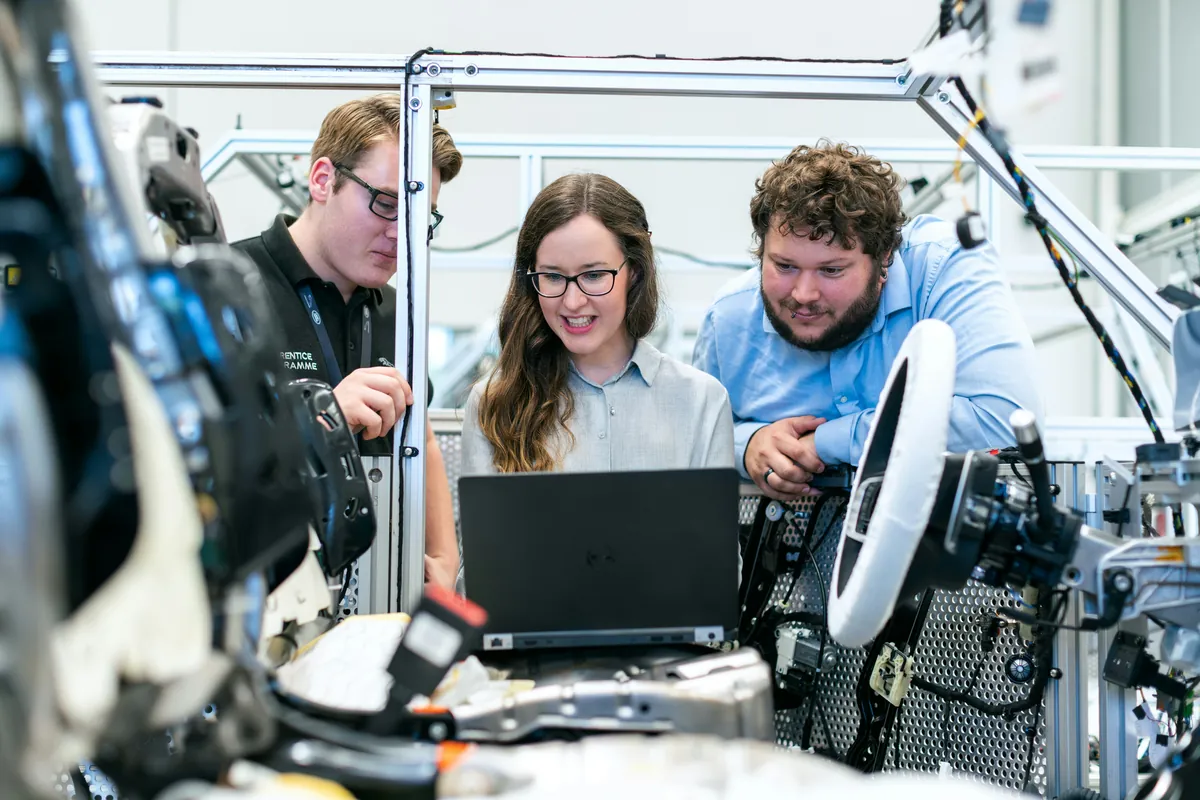
Change is accelerating. Your operation still has to run.
AI, automation and connected systems are changing what manufacturers can do. But a compelling demonstration does not tell you whether a solution fits your equipment, data, workforce or production schedule.
BlueBlocks helps turn that complexity into a clear requirement and a meaningful provider comparison, before you commit.
Let’s clarify your next moveOrders, inventory and production information should not live in separate conversations.
Repeated data entry and slow approvals consume time your people could use elsewhere.
Similar product names can hide very different scope, integration effort and support.
Production windows, operator adoption and recovery plans deserve attention from the start.
Manufacturing is not one industry
Discrete, batch, continuous, make-to-order or high-volume production: your processes shape the technology you need. Explore the sectors and specialist operations we help source technology services for.
Browse the six groups below for manufacturing sectors and specialist examples.
Meat and seafood processing; dairy; fruit and vegetables; grain and oilseed milling; bakeries; confectionery; prepared foods; animal feed.
Breweries, wineries, distilleries, soft drinks, bottled water and tobacco processing and products.
Clothing, workwear, protective garments, footwear, leather goods, luggage and accessories.
Residential and office furniture, kitchen cabinets, institutional fittings, mattresses and custom millwork.
Jewellery, sporting goods, toys, games, signage and other specialised manufactured products.
Where technology can helpBatch traceability, production planning, inventory accuracy and consistent quality.
Refineries, lubricants, asphalt products and other petroleum and coal-derived products.
Basic and specialty chemicals, resins, industrial gases, fertilizers, pharmaceuticals, paints, coatings, adhesives, soaps and cleaning products.
Injection moulding, extrusion, films, packaging, pipes, composites, tyres, seals and industrial rubber products.
Cement, concrete, glass, ceramics, bricks, stone products, insulation and other construction materials.
Where technology can helpRecipe and lot control, asset visibility, quality records and secure IT/OT connections.
Steel mills, foundries, aluminium production, non-ferrous metal refining, rolling and extrusion.
Machine shops, CNC machining, sheet metal, structural fabrication, stamping, forging, fasteners, tooling, heat treatment and metal finishing.
Industrial machinery, agricultural and construction equipment, pumps, compressors, HVAC equipment, material handling and custom automation equipment.
Where technology can helpJob costing, engineering change control, maintenance planning and connected ERP/MES data.
Semiconductors, circuit boards, communications equipment, computers, sensors, instrumentation and electronic assemblies.
Motors, transformers, switchgear, batteries, lighting, household appliances, cables and electrical components.
Medical instruments and supplies, precision devices, additive manufacturing and specialist contract production. Process-specific validation needs are scoped with the right specialists.
Where technology can helpComponent traceability, test-data integration, version control and service-ready product information.
Vehicle assembly and parts; EV components; aerospace systems and parts; rail equipment; shipbuilding, boats, trailers and other transportation equipment.
Where technology can helpSupplier coordination, serial-level traceability, engineering records and delivery visibility.
Sawmills, engineered wood, panels, prefabricated wood components, doors, windows and other wood products.
Pulp and paper mills, paperboard, corrugated packaging, tissue and converted paper products.
Commercial and packaging printing, labels, prepress, binding and finishing.
Fibre preparation, yarn, fabric production, dyeing and textile finishing.
Technical textiles, carpets, rugs, industrial fabrics, household textiles and other made-up textile products.
Where technology can helpOrder-to-production workflows, materials planning, waste visibility and reliable plant connectivity.
The right scale of support
Technology decisions should reflect your people, growth plans and operating complexity, not a one-size-fits-all implementation.
Connect quoting, orders, stock and accounting. Replace fragile spreadsheets and manual handoffs with systems your team can maintain.
Look for proportionate implementation, practical training and accessible ongoing support.
Bring production, warehouse, quality and finance information together. Improve planning across more products, customers and locations.
Look for integration experience, migration planning and clear ownership of every interface.
Align ERP and plant systems, industrial data, security and shared services while preserving the operating needs of each site.
Look for programme governance, site-level rollout plans and support that works across locations.
From a business bottleneck to a technology opportunity
Start with the outcome. Then compare the approach, the delivery team and the ongoing support needed to make it work.
An order should not need to be retyped at every handoff. Connect the steps around production before adding another disconnected tool.
Use AI to interpret documents, retrieve approved knowledge and coordinate bounded tasks across business systems, with accountable human approval where it matters.
Where usable data exists, evaluate models that help teams recognise patterns, anticipate issues and prioritise decisions.
Connect enterprise resource planning, manufacturing execution and the information your people need to run the business.
Office networks and operational technology have different reliability and safety needs. Select expertise that understands both the connection and the boundary.
Keep people, plants and partners connected with infrastructure and support suited to how your business runs.
Your workflow. Your assumptions.
Think of a repeated task: re-entering orders, chasing approvals, preparing reports or updating stock records. Explore the time capacity you could recover if a better workflow reduced that effort.
Adjust the example values to reflect your operation. The time reduction is your assumption, not a research prediction.
Enter a whole number within each stated range to see the estimate.
Monthly task time = people × minutes per day × working days ÷ 60.
Potential monthly capacity = monthly task time × assumed time reduction ÷ 100. The annual illustration multiplies this by 12; it assumes the same working pattern each month.
Use a measured baseline and a provider-validated target when building a business case. Benefits depend on process suitability, data quality, adoption and implementation. Inputs stay in this page and are not sent to BlueBlocks.
Why BlueBlocks
You should not have to become an expert in every platform, integration method or AI claim to make a sound decision.
BlueBlocks helps bring your production context into discovery, identify the expertise your requirement needs and make competing proposals easier to understand.
A clearer starting point
Yes. Bring the needs of your operation, whether that is a single workshop, a growing factory or a multi-site group. We help frame the scope and find a delivery approach proportionate to your size, systems and budget.
No. Start with the bottleneck or outcome you want to improve. We help clarify what is happening, what information is available and whether specialist discovery is needed before comparing solutions.
Yes. Integration, workflow improvements, better reporting or targeted support may be more appropriate than a full replacement. Ask providers to compare options and explain migration effort, dependencies and ongoing costs.
We help scope the technology requirement and identify the relevant expertise and evidence to request. Sector-specific validation, safety, export-control or regulatory obligations must be addressed by appropriately qualified specialists; a general IT credential is not enough.
Yes. You can bring an existing provider into the discussion and proposal comparison. The aim is a clear requirement and an informed choice, including how new and existing partners will work together.
Your selected provider delivers the contracted work. You choose the provider and contract directly with them. BlueBlocks helps with requirement clarity, proposal comparison and follow-up; agree the implementation, training, support and responsibilities before work begins.
Find your starting point
Explore the work you need help with. We help clarify the brief and connect you with suitable providers.
Connect predictive models with usable data, business decisions and ongoing performance checks.
Explore this serviceSelect and implement business systems around real processes, data and user needs.
Explore this serviceAssess ERP dependencies, transition options and business continuity before choosing a migration path.
Explore this servicePlan workload readiness, migration responsibilities and dependable operation after the move.
Explore this serviceA stronger next move starts with clarity
Less manual work. Better visibility. More connected systems.
Tell us where you want to get to, we’ll help clarify the next step.